Bringing Nature into the Makerspace During the Holiday Season
The holidays are upon us, and that means the potential for increased waste. Whether you are celebrating the winter solstice, Christmas, Hanukkah, Kwanzaa, or any other holiday falling in and around December, you may find yourself tossing out much more trash as compared to any other time of year. This could come from eating more food, doing more shopping, wrapping more presents, buying decorations, or increasing your traveling.
 |
| Photography of Green Pine Tree [Photograph], by I Iriser, 2017, Pexels (https://www.pexels.com/photo/photography-of-green-pine-tree-943898). CC0 1.0. |
Holiday Waste:
As an interesting research-based side note, I spent an inordinate amount of time tracking down an often repeated claim that we (in the U.S.) produce 25% more trash between Thanksgiving and New Years. Sites like ABC News, Architectural Digest, Earth911, Fox News, and WBUR Boston have all recently referred to this statistic, which some claim comes from the EPA, and others from Stanford. I even found a blog post from just last week on the Columbus (Ohio) Zoo and Aquarium website that refers to it. Yet the EPA page is archived, and makes no connection to any studies verifying this claim, and the link to the Stanford webpage merely redirects users to their main sustainability website.
This called for a search in the Internet Archive's Wayback Machine, which finally led me to the original Stanford webpage making the claim, which hasn't been live since somewhere between June and July of this year (2023), which references another defunct webpage at Use-Less-Stuff.com, which was run by what is now known as Robert Lilienfeld Consulting, and which *run-on sentence sigh* actually just makes this claim with no evidence to support it. *whew*
Later, I actually found an undated post by Stephen Dworkin (n.d.) at Environmental Magazine that discusses the origins of this statement. According to this article, the person who made the original claim, Robert (Bob) Lilienfeld, got the figure from the Garbage Project at the University of Arizona and data from Milwaukee, Wisconsin. And the number itself comes from the 1990s (I think this 1998 article from the Oklahoman may confirm this timeframe). Now, this doesn't mean that we don't produce more waste in December. Lilienfeld and Dworkin both seem to think the number has most likely increased since its origination, and a poll from 2021 (as reported by Chris Melore) found that people estimate they average about 43% more waste during the holidays. I think this definitely requires some further study! And it definitely points out the need to follow through on sources to actually confirm the validity/accuracy/currency of popular claims.
However, whether we produce 25% more waste during the holidays or not, I think we can all agree that practicing greener holiday traditions can, at the very least, make us all more aware of the impact we have on our planet. We can all afford to make small changes that will not only lessen our carbon footprint, but may even help us save money during a season when we typically spend crazy amounts of money (Jim Probasco and D. Tighe have interesting numbers regarding this trend).
A few ways we can look at reducing our carbon footprint is by looking at three common holiday traditions: the tree, gift wrap, and decorations.
The Tree
At first glance, one might think that buying an artificial tree would be better for the environment. After all, you aren't responsible for another tree being cut down every year! But if you do choose to go this route, know that it could take anywhere from 5 to 20 years for the associated ecological footprint caused by the production of that tree to make the purchase more sustainable than a real one (Yale Office of Sustainability, 2020; Zraick, 2018). The variation in this time estimate reflects the different sources I've looked to to find this number. This is another issue that I think might take a bit more research. But the point is that manufacturing a plastic tree in China, then shipping it over to the United States, brings up reasonable concerns about the carbon footprint generated by artificial trees (Chiu, 2022). Ultimately, it looks like the most sustainable option might be to buy a potted (live) tree that you can keep after the season is over (McAllister, 2023). Just some food for thought when weighing the advantages and disadvantages of live vs real (cut) vs fake trees. Honestly, I think it comes down to whatever is the best option for your lifestyle.
Wrapping Paper
As you may know, not all gift wrap is recyclable. Any wrapping paper that is shiny, metallic, glittery, or coated in plastic should probably go to a landfill instead of a recycling center (Arcuni, 2019). And blindly tossing all your gift wrap into the recycle bin in the hopes that the recycling center will just figure it out themselves isn't useful either, as this "wishcycling" ends up contaminating recyclable material, makes it harder for workers to do their job, and may even damage machinery (Hunn, 2021; New Haven Solid Waste & Recycling Authority, 2021). So if you do find yourself dealing with traditional gift wrap, Recycle Now suggests conducting a "scrunch test" to see if it is indeed recyclable. Otherwise, the EPA suggests wrapping gifts in recycled paper and trying to focus on giving gifts that don't require as much wrapping or packaging in the first place, like gift certificates or concert tickets (2023).
Decorations
Lastly, the New York State Department of Environmental Conservation suggests finding more sustainable options for decorations. One suggestion is to use Energy Star qualified LED lights, which are not only 90% more efficient than traditional lights, they even last longer. Another suggestion is to avoid tinsel and plastic decorations (n.d.). This brings me to the point of this blog post, which is the creation of more natural holiday decorations. If you've stuck with me this far, you will soon be rewarded!
Nature-based Makerspace Ideas for the Holidays:
Now that we've established that the holidays are an excellent time to consider practicing more eco-friendly traditions, let us move on to how you can use your makerspace as a way to encourage further conscientious holiday practices amongst your patrons. To support an environmentally friendly holiday season, use your makerspace to share ideas and materials that will encourage the adoption of sustainable decor practices. One way to do this is to bring in natural elements from the outdoors. Not only are found materials going to be much less expensive to gather (i.e., free), depending on how you use them in your crafting processes, when the holidays are over you can either save them for future years or return them back to where they came from!
1. Pine Cones
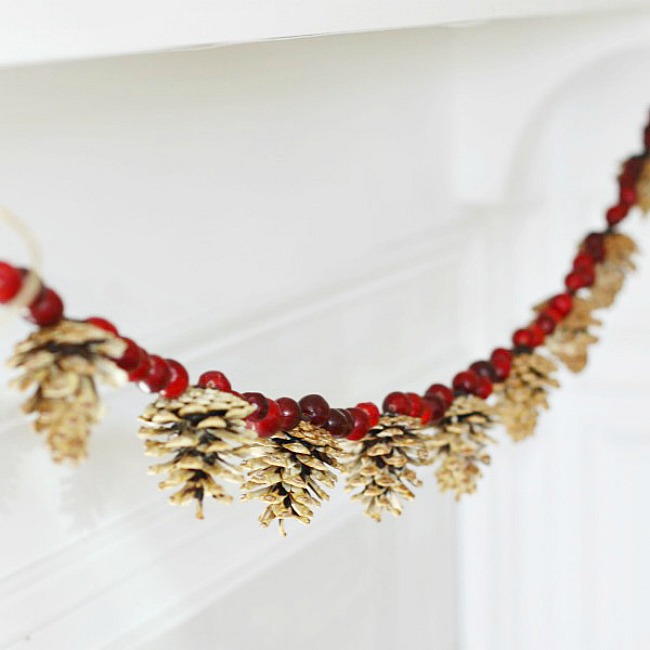


2. Greenery
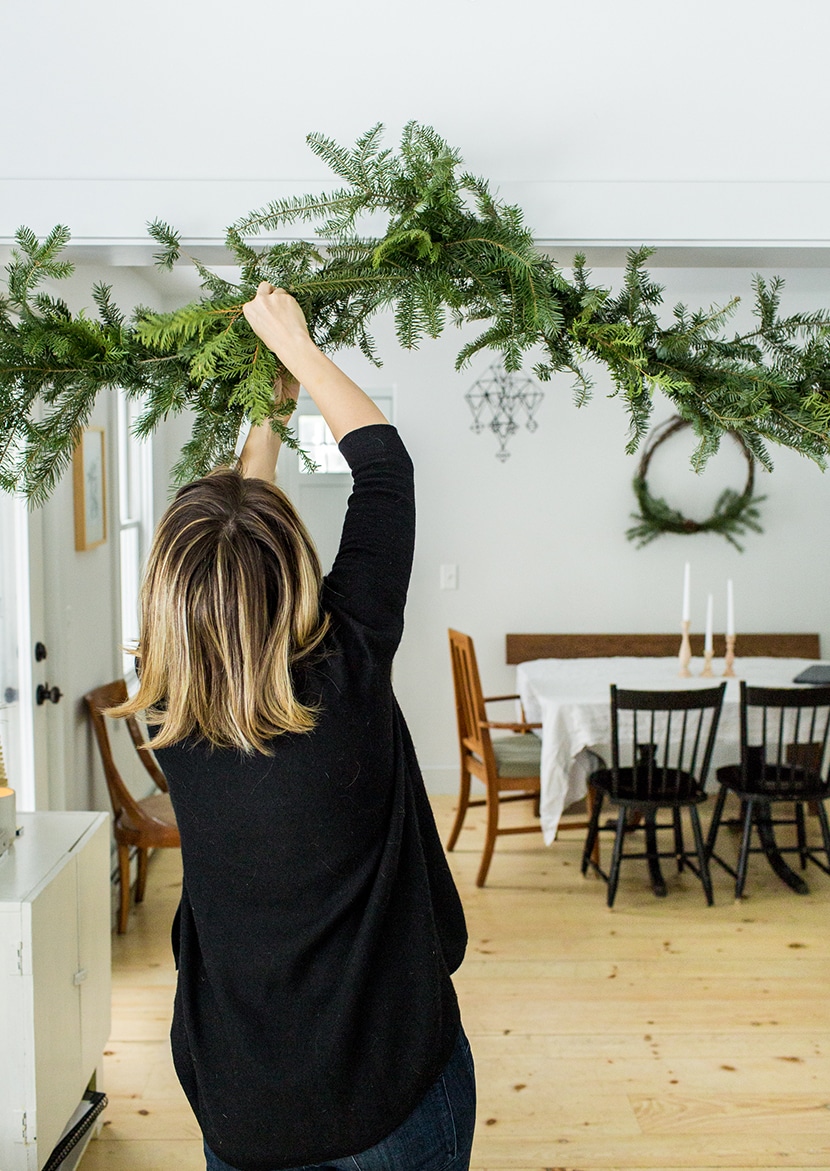

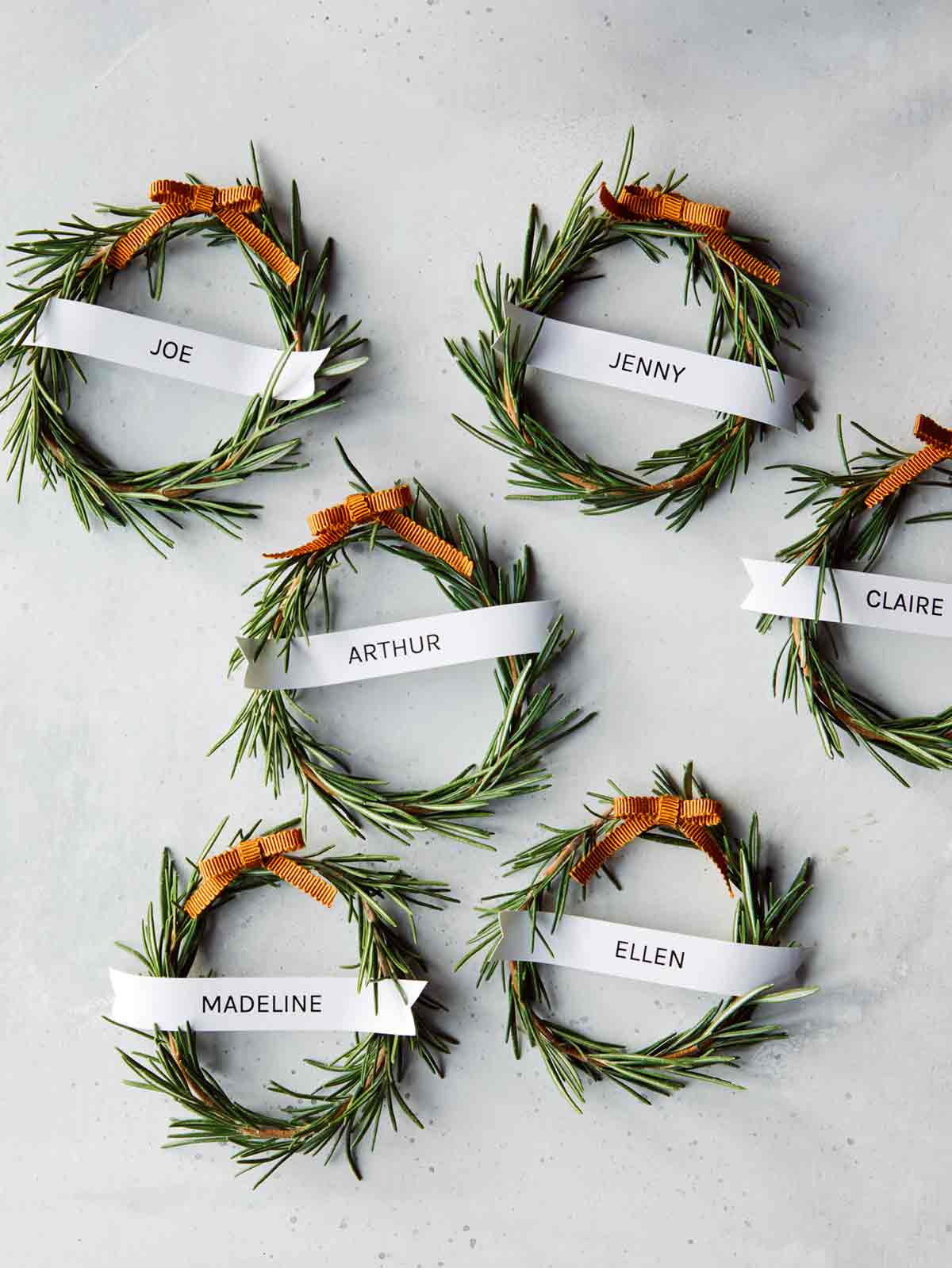
3. Sticks and Wood



Other Sustainable Makerspace Ideas for the Holidays:
1. Host a Greener Gift Wrapping Party
2. Handmade Paper Holiday Cards
3. Upcycled Gifts
References:
Arcuni, P. (2019). Can you recycle your wrapping paper? Here's how to tell. KQED. https://www.kqed.org/science/1951672/can-you-recycle-wrapping-paper-heres-how-to-tell
Chiu, A. (2022, November 25). Are real or artificial Christmas trees better for the environment? Washington Post. https://www.washingtonpost.com/climate-solutions/2022/11/25/artificial-tree-real-christmas-environment
Dworkin, S. (n.d.). By the numbers: Holiday waste. The Environmental Magazine. Retrieved November 30, 2023, from https://emagazine.com/holiday-waste
Hunn, K. (2021). Are you a wishcycler? Environmental Center, University of Colorado Boulder. https://www.colorado.edu/ecenter/2021/04/01/are-you-wishcycler
Iriser, I. (2017). Photography of Green Pine Tree [Photograph]. Pexels. https://www.pexels.com/photo/photography-of-green-pine-tree-943898
McAllister, S. (2023). Real vs. artificial: What is the most sustainable type of Christmas tree? Zurich. https://www.zurich.com/en/media/magazine/2022/real-vs-artificial-what-is-the-most-sustainable-type-of-christmas-tree
Melore, C. (2021). Americans pile up nearly 30 pounds of extra trash per week during the holidays. StudyFinds. https://studyfinds.org/extra-waste-garbage-during-the-holidays
New Haven Solid Waste & Recycling Authority. (2021, January). Recycling awareness: Aspirational (wishful) recycling. Recycle News Haven. https://www.nhswra.com/wp-content/uploads/2023/02/Recycle-News-Haven-issue-2-1-2021-1.pdf
New York State Department of Environmental Conservation. (n.d.). Sustainable holidays. Retrieved November 30, 2023, from https://www.dec.ny.gov/environmental-protection/recycling-composting/waste-reduction/sustainable-holidays
Probasco, J. (2023). Average cost of American holiday spending. Investopedia. https://www.investopedia.com/financial-edge/1112/average-cost-of-an-american-christmas.aspx
Tighe, D. (2023). Roughly how much money do you think you personally will spend on Christmas gifts this year? Statista. https://www.statista.com/statistics/246963/christmas-spending-in-the-us-during-november
United States Environmental Protection Agency. (2023). Reducing waste: What you can do. https://www.epa.gov/recycle/reducing-waste-what-you-can-do
Yale Office of Sustainability. (2020, December 11). Where did your Christmas tree come from? Yale University. https://sustainability.yale.edu/blog/where-did-your-christmas-tree-come
Zraick, K. (2018, November 26). Real vs. artificial Christmas trees: Which is the greener choice? New York Times. https://www.nytimes.com/2018/11/26/business/energy-environment/fake-christmas-tree-vs-real-tree.html
Comments
Post a Comment